
About the Author
Lester Ruth, Ph.D.Lester Ruth is a historian of Christian worship, with particular interests in the early church and the last 250 years. He leads the Christian Nationalism and Worship project.
Watch
Two versions of the footage are available: an abbreviated version with no ads, and a complete version with ads.
Context
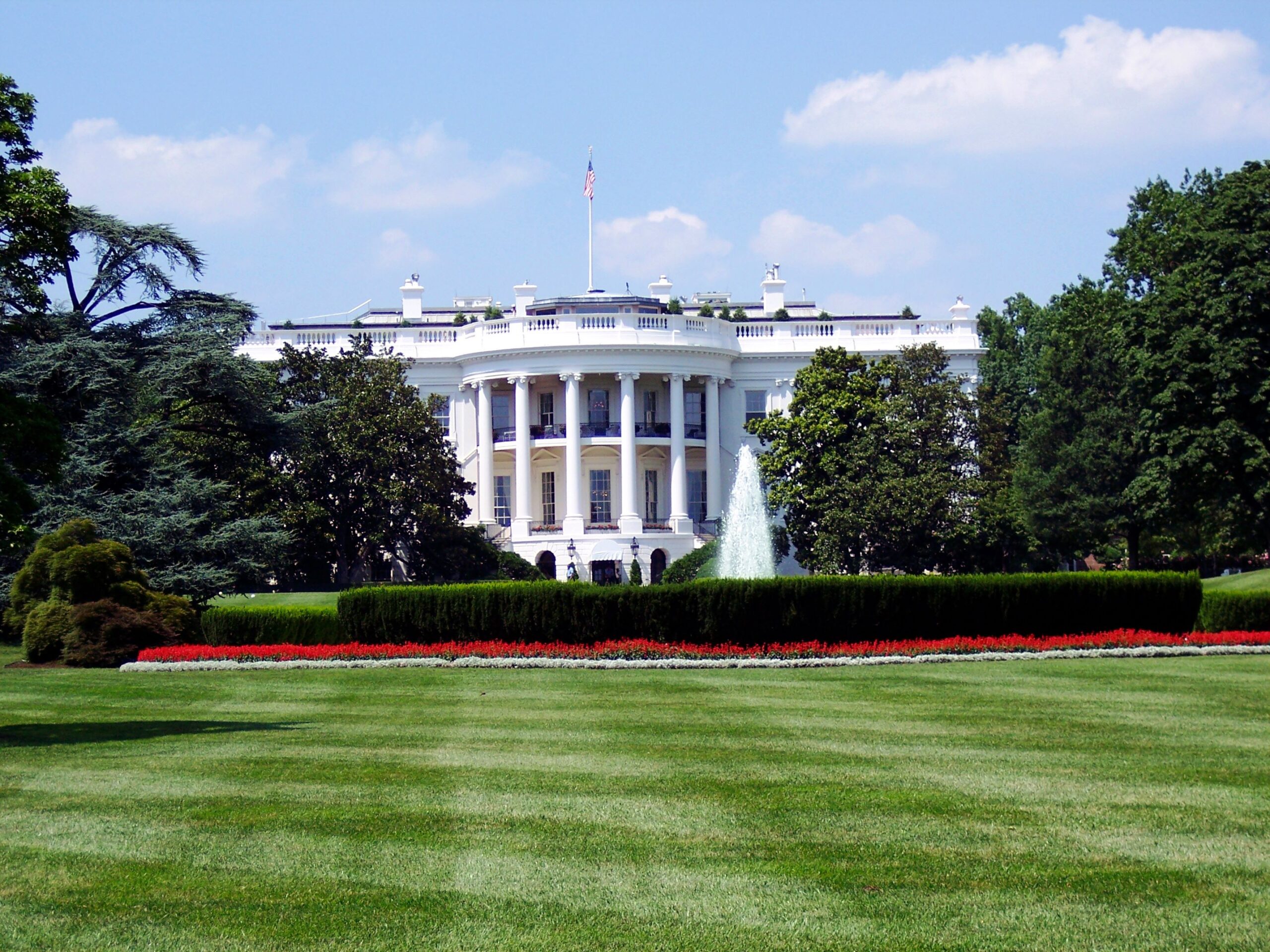
This video began to circulate on social media in the summer of 2025. It was shot in the parking lot between the West Wing of the White House and the Executive Office Building. No one is identified.
Transcript
We just thank you right now, Lord, from the east, the west, the north, and the south. You will shake America with your power and your glory. We cancel every assignment of the enemy. This nation was birthed to be one nation under God, and we are standing on the soil of the White House and we are declaring your word: every place that our foot will trod, you will give it to us, and we are taking the land. We thank you, oh Lord. You have brought us to the kingdom for a time such as this, and this is the time. And so, we declare right now, from the capital of our nation, that America will come back to God. We will come back to God. Nothing will stop this nation. And we speak right now by the authority of heaven. You told us to bring heaven to earth. Heaven is being released through your people right now. We thank you for the unity of this body that we have right now, that there is strength in unity just like the 120 in the Upper Room when we were gathered together [and] the Holy Spirit fell. We thank you that we are gathered now in this century and this time for a purpose. We pray protection over President Trump. We pray legions of angels guiding and protecting him. We thank you every time he gets in an airplane that there will never ever be any attack on his life! He will live out his days for what you have written for him. And he will be a leader that this world will never forget because he will be remembered for turning America back to God! We thank and praise you today. We declare Jehovah Sabaoth, that God arise and his enemies be scattered, that them that hate him flee before him! And it is time, and we are declaring today, that no stronghold, it doesn’t matter what it is, it cannot face the power of our Almighty God. Because it’s at the name of Jesus every knee shall bow and every tongue shall declare that you and you alone are Lord. So we declare today again we will see a manifestation of your power and your glory and you are about to do something that is unprecedented so we thank you and praise you and we glorify you. In Jesus’ name. Hallelujah.
Liturgical Description
Extemporaneous prayers follow several regular patterns, all seen in this prayer. There’s a structure including clear language to start and end (“We just thank you right now, Lord…” / “In Jesus’ name”) as well as common transitions that mark progress through the prayer. And the content of extemporaneous prayers comes from predictable sources, all of which occur in this prayer. The first are standard phrases drawn from that community’s spirituality. Here’s an example in this prayer: “We cancel every assignment of the enemy.” Extemporaneous prayers also are loaded with biblical phrases and allusions (e.g., “Just like the 120 in the Upper Room…” or “…Jehovah Sabaoth, that God arise and his enemies be scattered” or “…at the name of Jesus every knee shall bow…”). Finally, the language also reflects phrases from the broader culture such as “birthed to be one nation under God,” which is a mashup of “birth” language from Lincoln’s Gettysburg Address and “one nation under God” from the Pledge of Allegiance.
Notice, too, how the prayer approaches prayer as if it was a kind of effective tool, i.e., that what is spoken in faith will be an effective tool to release the power of God. That’s why this prayer switches between asking God for something and declaring that what is spoken will certainly be accomplished. For more information on this Pentecostal approach to prayer, see the book by Dutch Sheets entitled Intercessory Prayer described in the annotated bibliography.
Societal Aspirations
Three related phrases reflect their aspirations for the United States: “America will come back to God”; “turning America back to God”; and “one nation under God.” These phrases reflect the goal of the prayer even though they are left very ill-defined. What exactly do they mean? They seem to mean three things in the prayer: 1) that God will be victorious against all “enemies” and “strongholds”; 2) that heaven will be brought to or released upon earth (God having answered the prayer through endowing these people with power as agents to achieve this end); and 3) that President Donald Trump, as the God-given and God-protected champion, would complete God’s purpose for the United States.
With this aspiration in mind, notice how the prayer uses the Bible in something called typology or allegory, where something in the Bible becomes a way of describing something outside the Bible. And so, the language in Deuteronomy 11:24 or Joshua 1:3 (God’s promise that every place the Israelites would trod in the Promised Land would be given to them by God) was used to describe how being in politically-powerful positions was God’s gift to those praying. In the same way, the encouragement given to the heroine of Esther 4:14 that she was in her advantageous royal position “for such a time as this” became in this prayer a way of implying that the worshipers’ political positions were part of God’s providential directing of human affairs.
Appraisal: The Four Theologies of Worship
Read more about the four theologies of worship →
Dynamic Worship Narrative
Notice how the prayer rehearses a story of Christians’ political power more than it remembers God’s activity in Jesus. The dominant story is about the nation. This approach contrasts with classic forms of Christian praying and worshiping, which typically focus on remembering God’s activity and nature as reflected in the Bible.
The probing question: What foundational story is told or implied in the content of this prayer?
Eschatological
The prayer makes an excessively tight fusion between the future and present. By having such a strong sense of the future being realized now, the pray-er conflates the Kingdom of God, the United States, and the worshiping church.
The probing question: Is it more love or is it more power that the prayer implies will be the defining quality of our existence in the Kingdom of God?
Trinitarian
The prayer is unconcerned or unaware that the goal in worship is to be drawn into the relationship between the Father, Son, and Holy Spirit. Instead, it seems more about bending the Triune Godhead into our own political and social visions.
The probing question: Does the content or tone of the prayer seem like something you could imagine Jesus Christ praying to God the Father?
Christological
The prayer is technically sound at a very, very basic level in that it assumes a unity between Jesus Christ and the church as the Body of Christ. But the prayer has no feel for the mind of Christ and what the Bible calls the “meekness,” “humility,” or “gentleness” of true wisdom (see James 3:13, 17).
The probing question: Does the aggressiveness—even perhaps anger—we see in this prayer seem fitting for the Body of Christ?
For Consideration & Discernment
Notice how the prayer ends on a triumphalist note declaring that no stronghold (the political and societal forces that would prevent America from “coming back to God”) can face the power of Almighty God, because at the name of Jesus “every knee shall bow and every tongue shall declare that you and you alone are Lord.” The tone in this prayer is one of victory, power, and domination. The person praying at this point is drawing from the language of Philippians 2:10–11. But take a look at these two verses in their original context of Philippians 2:1–13, where Christ is lifted up as a model of being a servant characterized by tenderness, compassion, and humility. Does the prayer’s appropriation of this biblical language reflect the tone and purpose of the apostle Paul’s original use in Philippians?
Reflection & Discussion Questions
What, if much, in the prayer remembers the activity and revelation of God in Jesus Christ? What picture of God and Jesus do you get from this prayer? How does this picture compare to the fullness of the revelation seen in the entire New Testament’s portrayal of Jesus Christ?