
About the Author
Lester Ruth, Ph.D.Lester Ruth is a historian of Christian worship, with particular interests in the early church and the last 250 years. He leads the Christian Nationalism and Worship project.
Watch
Particularly illuminating sections can be found in an opening ceremony involving national and military rituals (09:20 through 21:46) and a section of the sermon in which the preacher bemoans the decline of the nation and appeals to American exceptionalism (33:10 through 46:17).
Context
This service was the annual Fourth of July service (“Independence Worship Service”) of a church in Aiken, South Carolina: St. John’s Methodist Church. It was live streamed on its Facebook feed on July 7, 2024, because of that Sunday’s proximity to July 4, and then subsequently posted on YouTube. The pastors occasionally reference this congregation’s recent disaffiliation from the United Methodist Church.
Transcript
The service’s opening prayer is useful for seeing a fusion of national identity and Christian religiosity as it blends language from the Bible, the Declaration of Independence, and the standard narrative about the Christian founding of the nation:
Please pray with me. Almighty God, who created us in your image and has given us inalienable rights: Grant to the people of this country and all the nations of the earth a desire to worship you in Spirit, truth; in humility and repentance; and compassion for all. Lord, in whose name our ancestors and founders of this country put their hope and won liberty for themselves and us: Grant that we may use our freedom for righteous living in accordance with your gracious will; through Jesus Christ our Lord, who lives and reigns with you and the Holy Spirit, one God, forever and ever. Amen. Please remain standing for the presentation of the colors.
Liturgical Description
St. John’s Methodist Church reflects the sort of middle position Methodism holds within the landscape of Protestant worship, at times leaning toward a more formal approach (especially in the use of set liturgies) and sometimes leaning toward a less formal manner (e.g., more extemporaneous prayer or simpler ceremonies).
This service in its entirety has two parts. The longer, opening part of the service is the celebration of the United States. Other than the long opening rite of nation celebration, the order of worship for this first part of the service is similar to what would occur on most Sundays at this church. (The bulletin for the service in the video can be found here.) The second part of this service was the rite for the ordination of the congregation’s two associate ministers, which were needed because of the congregation’s departure from its prior denomination. (In United Methodism bishops preside over ordinations.)
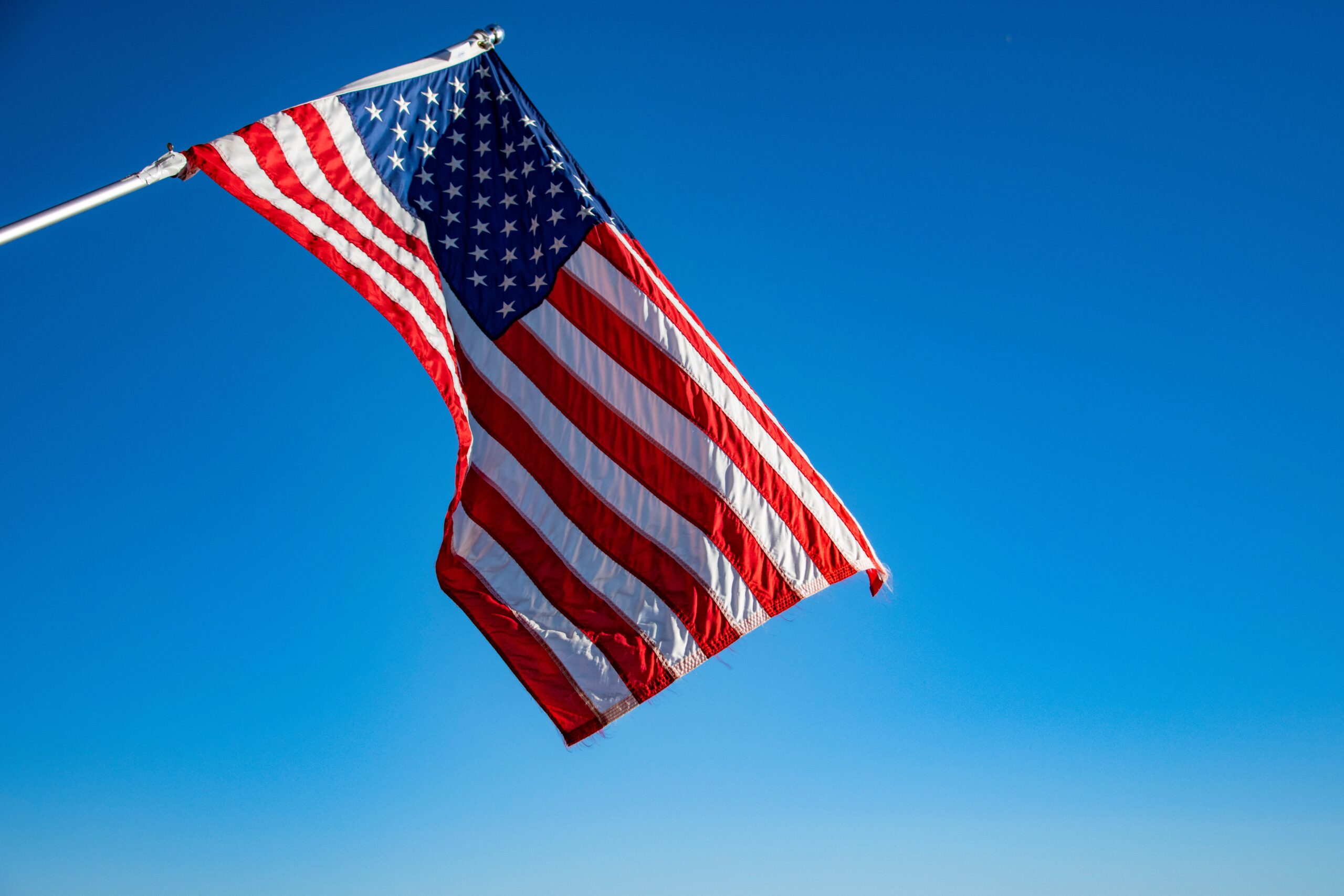
National-oriented services by Type 1 Covenant Nation Celebrators usually share several characteristics commonly: 1) using civic rituals involving national symbols, texts, and music; 2) honoring the nation’s military with special recognition given those who had died in service to the nation; 3) reciting stories about the God-directed history of the nation; 4) dramatizing the nation’s history; 5) showcasing children to represent the next generation absorbing the nation’s values and history; and 6) showing pictures of the nation’s scenic beauty and/or human accomplishments. St. John’s service incorporated the first three of these dimensions with an especially strong emphasis on the first two through ceremony and special music, especially through processing with the flags and through special music. Spoken elements like prayers and the sermon carried the weight of reciting national narratives.
Societal Aspirations
This service’s sermon is the best window to get a sense into these aspirations and their vision for the nation. One focus is the historical vision of the United States as having been a great, good, and godly nation. The preacher uses some commonplace ways to tell this history, for example, quoting a statement attributed (wrongly) to the 18th century French visitor to the United States, Alexis de Tocqueville, that America is great because she is good (found at the 43:07 mark of the video). This positive vision is linked to members of the military who have served the nation and to Christians who have been “yoked” to Christ and have been faithful in following him. But there is another group: those who would lead the nation into the way of sin and thus contribute to its decline. The sermon repeatedly bemoans having to be “unequally yoked” with such individuals. The service aspires that this tension be resolved by Jesus being both our personal Savior and also America’s Savior.
Appraisal: The Four Theologies of Worship
Read more about the four theologies of worship →
Dynamic Worship Narrative
The spoken and sung elements highlighting the nation’s history and current situation overwhelm the acts of worship that remember God’s story of saving activity for the world. There is no strong, recurring emphasis upon the death and resurrection of Jesus Christ being the key to God’s story.
The probing question: Does it seem the congregation is more emotionally invested in those parts of the service celebrating the nation and its military than in the parts that touch on God’s activity in Jesus Christ for the world?
Eschatological
An excessive focus on the things of this current age is seen in how much the service is concerned about the state of the nation and its culture. Thus, a bigger vision of the cosmic end of God’s purposes is missed.
The probing question: Does the sermon’s anxiety work against patiently waiting for God to work out divine purposes in God’s own time?
Trinitarian
Other than a few standard liturgical acts of worship, notice how little attention is given to all three Persons of the Godhead and how tight the focus is on Jesus Christ. Indeed, the strongest visual imagery in the service along with the key symbols likewise accentuates the nation, not the Trinity.
The probing question: Does this service’s impulse arise from within the worshipers’ own zeal for the nation or does it arise from Jesus Christ’s zeal for the Father?
Christological
In this service the key community seems to be the nation, not the church and especially not the church as the Body of Christ. The church is thus implied to be those Christians who are simultaneously faithful Americans and those following Christ. Any sense of the church as a global, worldwide Body of Christ is minimal.
The probing question: How well could a faithful Christian from a different country participate in this service?
For Consideration & Discernment
The phrase “city on a hill” has become over the last several decades a common shorthand for referring to a belief in American exceptionalism (consider the 46:12 mark of the video), including a distinctive relationship the United States has with God. Take a look at the phrase in its original context as part of Jesus’ Sermon on the Mount (Matthew 5:14). Notice how it is addressed to the disciples of Jesus, which raises an important question: is it the church that is exceptional with a distinctive relationship with God, or is it some modern nation-state?
Reflection & Discussion Questions
If Christian worship should give a preliminary glimpse into the nature of what God’s coming Kingdom is going to be like, is there an inevitable contradiction in having a service that celebrates the military as much as this one did?